
There is something deeply meaningful about creating a home that brings generations together. For many families, the idea of welcoming aging parents into their space is not about obligation — it is about intention. It is about proximity without pressure. Independence without isolation. Support without sacrificing the lifestyle you have worked hard to build.
A well-designed multigenerational home is not a compromise. It is an evolution. When thoughtfully planned, it allows everyone to feel respected, comfortable, and connected while maintaining the privacy and autonomy that make a house feel like a sanctuary. The key is not simply adding an extra bedroom on the first floor. It is designing a main-level suite as an integrated architectural feature that supports long-term living beautifully and seamlessly.
At AV Architects + Builders, we approach main-level living as an opportunity to elevate the way families live together. Through our Master of the Main Level philosophy, we design suites that feel intentional, refined, and fully integrated into the overall home — never clinical, never “added on.” The result is a space that balances accessibility, acoustics, privacy, and elegance, creating a home that honors every generation while preserving the rhythm of your daily life.
Defining the Main-Level Suite
Before diving into the design, it is important to define what a main-level suite actually is. In a luxury custom home, this is more than just a bedroom on the first floor. It is a self-contained living area located on the same level as the kitchen, dining, and primary living spaces. Evaluating the pros and cons of a main floor suite and incorporating main-level living in home design reveals that it usually includes a spacious bedroom, a full ensuite bathroom, walk-in closets, and often a small sitting area or morning bar.
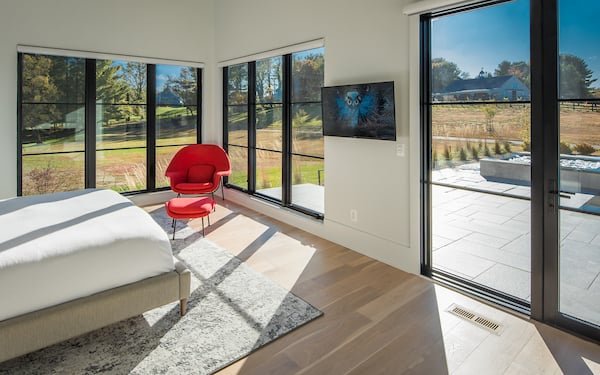
The goal is to provide a complete living experience that does not require using stairs. It is an architectural strategy that places the most important rooms within easy reach of each other. These suites are intentionally integrated into the home’s overall layout rather than being tacked on, maintaining visual and architectural consistency with the rest of the house while giving occupants a sense of true privacy.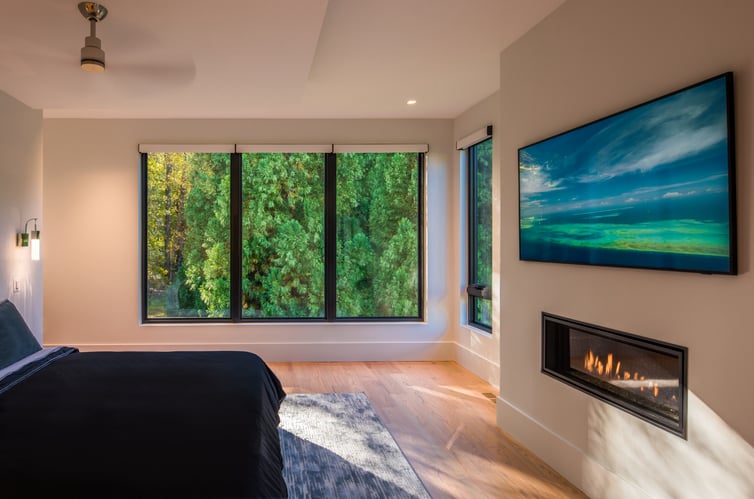 The Architect House, Great Falls, Virginia, AV Architects + Builders, Photography by Maxwell Mackenzie
The Ultimate Gesture of Respect: Understanding Needs
Designing a main-level suite is a way of respecting parents and elders by ensuring their later years are defined by comfort rather than struggle. It is about the practical dignity of allowing a parent to move freely through their home without asking for help. By bringing them into a space designed specifically for their needs, you are telling them they are a priority.
Aging parents usually prioritize comfort, convenience, and safety. They want living spaces that are easy to navigate without strain or risk of falls, featuring step-free entrances, wide hallways, and non-slip flooring. Privacy and independence are equally important; they appreciate having their own space to retreat or host visitors without feeling like they are intruding on your daily routine.
It is also helpful to distinguish these needs from those of empty nesters. While empty nesters look for lifestyle flexibility and low-maintenance spaces for hobbies or travel, aging parents focus heavily on accessibility and proximity to support. Understanding these differences helps guide design decisions to ensure the environment supports long-term well-being and inclusion in family life.
Overcoming the Fear of Living with Aging Parents
The hesitation many homeowners feel about multigenerational living is not about a lack of love; it is a fear of the unknown. There is a very real worry that your home will stop being your sanctuary and start feeling like a place where you are always on duty. You might fear the loss of your own routine or the potential for constant interruptions. Much of this is rooted in the psychology of house floor plans and how they influence our daily interactions and stress levels.
To address these fears, aim for architectural independence. By designing the main-level suite as a self-contained retreat, you eliminate the feeling that anyone is intruding. When parents have their own designated zone equipped with their own amenities, they feel empowered rather than like a burden.
This separation allows you to be a son or daughter again rather than just a caretaker. It preserves the boundaries of your marriage and your immediate family life while providing the peace of mind that your parents are safe and nearby.
Invisible Accessibility and Safety
Designing for seniors does not mean your home has to look like a hospital. Use a stealth approach to modern main-level living, incorporating key principles for architects when designing for unseen disabilities. Install zero-threshold entries where the floor is perfectly flat from the bedroom to the shower. There should be no lips to trip over and no bulky ramps. Wider hallways and doorways are another great tip because they simply feel grand and expensive while making the space easier to navigate.
Color and lighting play a significant role here as well. Soft, warm, and neutral tones create a calming environment, while LED lighting in home design can be used to create motion-activated strips along the baseboards that guide the way to the bathroom at night. Avoiding dark or highly reflective floors reduces visual confusion, while contrasting colors can highlight transitions like door frames or bathroom fixtures to improve spatial awareness.
Safety is further enhanced by integrating reinforced walls during the framing stage. This allows for the installation of beautiful designer hardware that doubles as support if needed. For those planning a custom rebuild forever home, these small details provide a massive safety net that blends perfectly into the luxury design.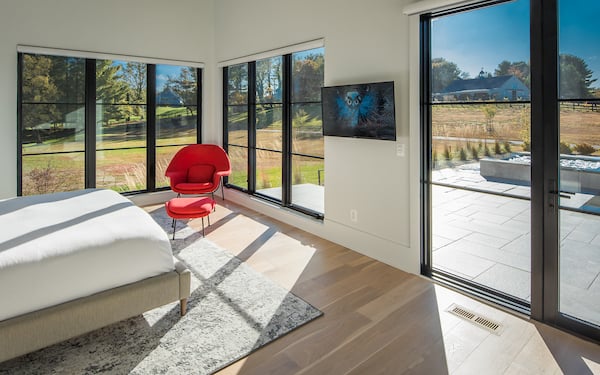 The Vista House, Great Falls, Virginia, AV Architects + Builders, Photography by Maxwell Mackenzie
Solving the Sound Barrier
Living together works best when you cannot hear everything the rest of the family is doing. Noise is often the biggest source of friction in multigenerational living in modern family homes. To solve this, make custom home acoustics a structural priority by understanding sound absorption and diffusion.
Use specialized insulation and staggered stud walls to ensure that the television in the living room does not interrupt a nap in the suite. You should also pay attention to the quality subflooring for home comfort and sound-dampening wraps for plumbing to ensure a quiet, hotel-like experience for everyone.
Outdoor Connections and Lighting
A great main-level suite should not stop at the interior walls. Prioritize giving parents their own direct access to the outdoors. Having a personal connection to nature is vital for mental well-being. Studies on daylight and health in homes suggest that consistent exposure to the outside environment significantly improves life quality for seniors. It is an essential part of knowing how to design the perfect outdoor space that accommodates every generation.
Lighting must also be layered to support longevity and mood. Design these suites with a plan for light in custom homes that includes large windows for natural light and dimmable ambient lighting for the evening. Focus on task lighting in key areas like the bathroom vanity—lessons from kitchen design evolution show that specialized lighting in prep areas is crucial for those with declining vision. Knowing how lighting affects mood helps in selecting fixtures that ensure the space feels warm and inviting rather than clinical.
Renovation vs. New Builds
Not every family can build from scratch, but a main-level suite can still be added through thoughtful renovation. Converting an existing room, garage, or basement space can create a functional suite without major construction. The key is to prioritize accessibility first—widening doorways and installing accessible bathrooms—while using consistent color palettes and finishes to tie the suite into the rest of the house. Renovations should aim to make the suite feel like a natural part of the home rather than a disconnected addition.
A Suite That Grows With You
A main-level suite is one of the smartest investments you can make because it is incredibly flexible. When you future-proof custom homes and weigh the pros and cons of first floor master suites, this space becomes a multifunctional asset.
If your parents eventually move on, the room never goes to waste. It can evolve into an executive home office, a five-star guest retreat, or a wellness area. You might even consider the impact of hidden systems like stacking closets that can eventually house home elevators or lifts if your needs change further down the road.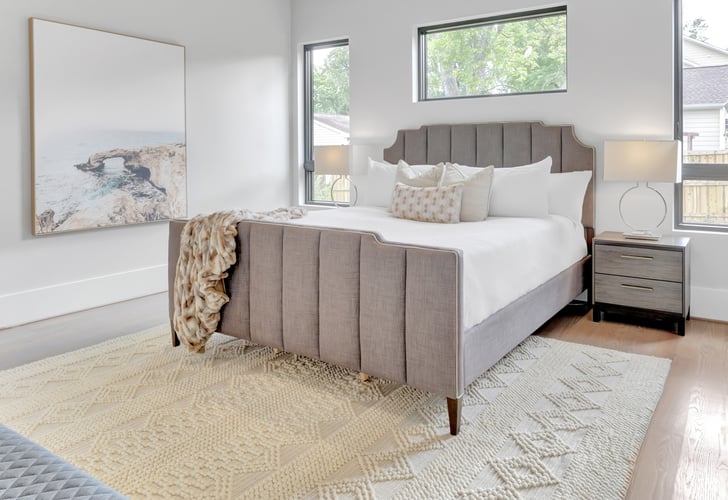 Main Level Modern, Falls Church, Virginia, AV Architects + Builders, Photography by Best Side Story Media
Start Planning Your Custom Home
Designing for the future is about more than just square footage; it is about building a space that supports independence, connection, and family harmony. Working with experts ensures that every detail, from furniture placement to soundproofing, is thoughtfully planned and integrated.
If you are ready to explore how a main-level suite can work for your family, schedule a discovery call with AV Architects + Builders and visit our learning center to explore examples of completed suites. Seeing how these spaces work in real homes can inspire your own design and help you make informed choices for years to come.

Topics: