
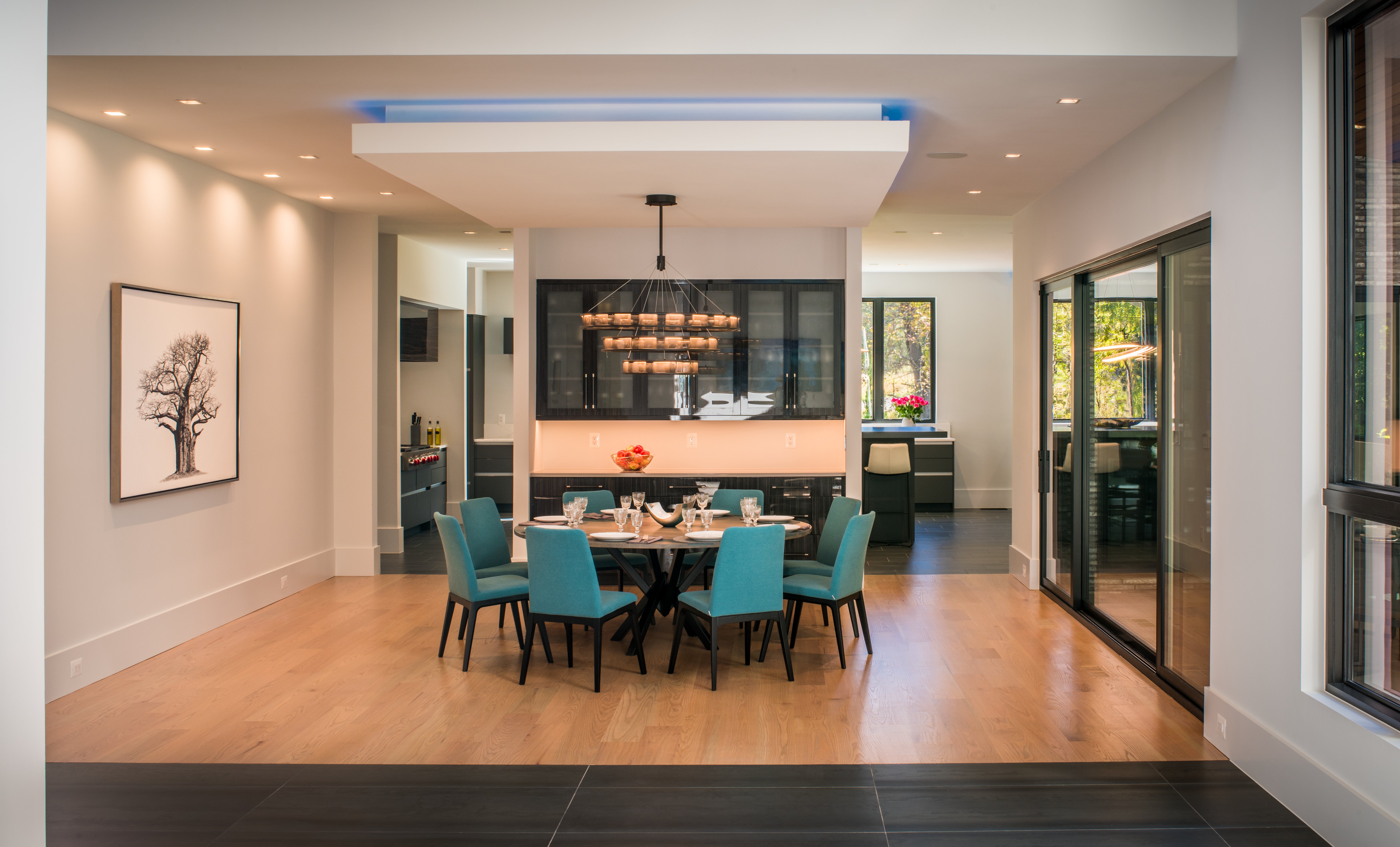
You bought your dream home and imagined family dinners in a bright, flowing space. The reality is different. Noise from the kitchen interrupts work calls. Cooking smells linger for hours. Toys and clutter are always in sight. What looked perfect on paper now feels overwhelming. Open-concept layouts often reveal the gap between design ideals and real-life routines.
Many homeowners share this struggle. Children play while adults cook. Conversations echo from one end of the home to the other. What was meant to feel connected can instead feel noisy and cluttered. This balance between openness and comfort has become one of the biggest design debates in modern homebuilding.
At AV Architects + Builders, we’ve seen how this plays out across many regions of the U.S. With decades of experience designing functional homes, we’ve learned what works and what doesn’t in open layouts. This blog breaks down the open-concept trend, its benefits and drawbacks, and practical tips to help you decide if it fits your lifestyle.
What Defines an Open-Concept Floor Plan
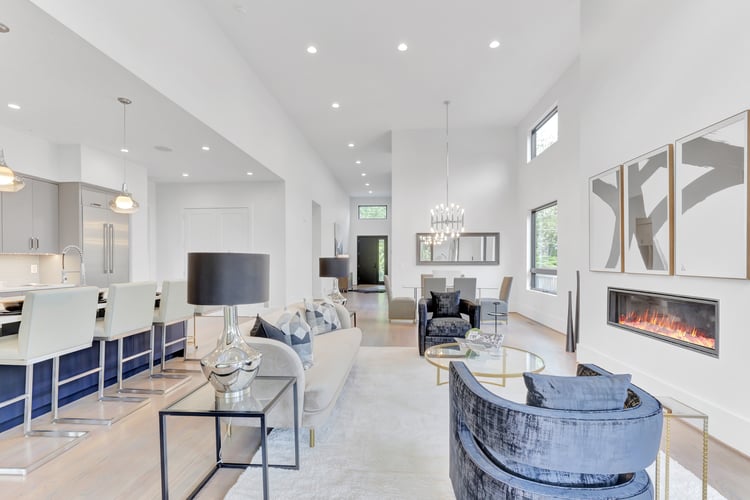
An open floor plan merges the kitchen, dining, and living areas into one continuous space with minimal interior walls. The goal is to create flow between activities and allow natural light to spread across shared spaces.
Traditional layouts, by contrast, separate rooms with walls and doors. Each area serves a specific function, offering privacy and better sound control. The open concept removes these divisions to encourage visibility, communication, and flexibility.
The History of the Open-Concept Movement
The open-concept trend began with early modernist architects like Le Corbusier and Mies van der Rohe, who promoted simplicity, light, and open interiors. Their ideas shaped residential design worldwide. After World War II, suburban homes embraced the concept, breaking away from closed-off rooms and creating spaces for family connection.
By the late 20th century, open layouts became a hallmark of American home design. They reflected a shift toward casual living and social interaction. Kitchens transformed from service areas into central gathering points.
Why Homeowners Started Removing Walls
The move to remove walls came from a need for openness, light, and flexibility. As families spent more time together, homes needed to support multitasking and movement. Parents wanted to cook while supervising children. Hosts wanted guests to flow easily between spaces.
Removing barriers also created the illusion of space in smaller homes. With fewer walls, light traveled farther, air circulated better, and homes felt more expansive. This design choice aligned with a modern lifestyle focused on connection and efficiency.
Open Concept vs Other Layouts
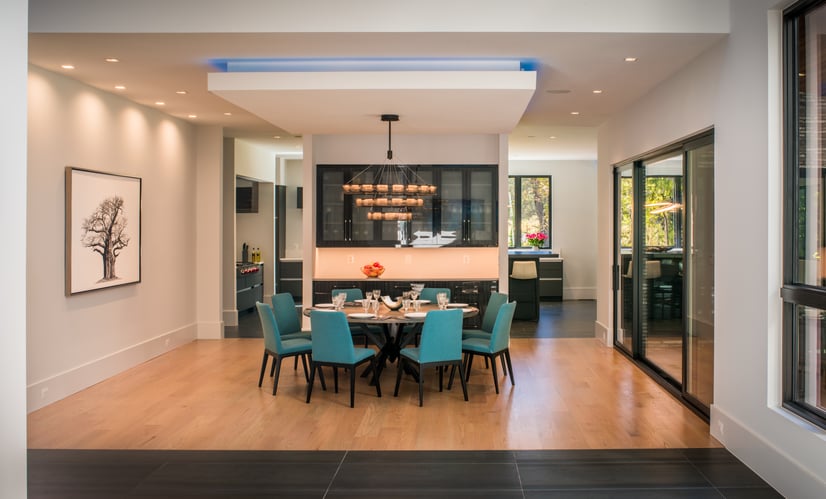
When comparing open and closed floor plans, the main difference lies in how privacy and openness are balanced. Closed layouts provide separation and control, while open layouts encourage interaction.
Homeowners can also explore different home layout shapes to find what fits their lifestyle. A U-shaped home, for example, provides natural division between quiet and active zones. L-shaped layouts keep sightlines open while maintaining boundaries.
For larger families or those with aging parents, multi-generational homes often combine open gathering areas with private retreats to support comfort and independence for all ages.
.jpg?width=721&height=500&name=Photo%20(67).jpg) The Angle House, McLean, Virginia, AV Architects + Builders
The Angle House, McLean, Virginia, AV Architects + Builders
The Benefits of an Open-Concept Layout
Open-concept design promotes togetherness. Family members can interact even when engaged in different activities. Natural light becomes more abundant, improving comfort and mood. Studies show that more daylight enhances focus and well-being, a benefit explored in detail in this article on natural light.
This design also suits main-level living, especially for accessibility and convenience. It aligns with sustainable home design principles by reducing dependence on artificial lighting and ventilation.
For those who love bright interiors, thoughtful light design in custom homes can further enhance the airy feel of open layouts.
The Drawbacks of Open Concept
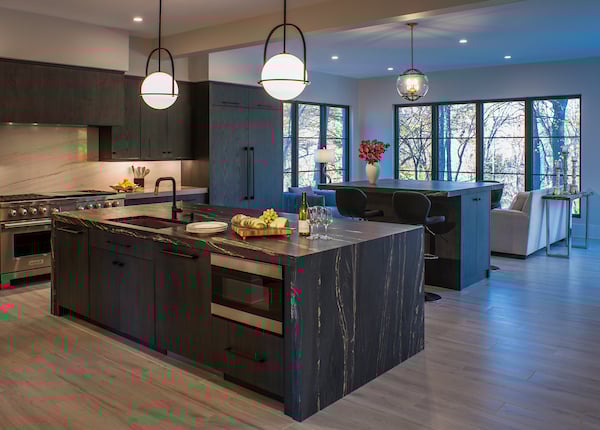
The most common challenge is noise. Without partitions, sound carries across the home. Cooking, television, and conversations can blend into one constant hum. Smells travel too, making it difficult to contain kitchen odors.
Open spaces can also feel less cozy. Without walls, furniture arrangements must define zones. Homes risk feeling unfinished or impersonal if not balanced with warmth. To fix this, designers often apply strategies to create a cozy atmosphere in large modern homes, using lighting layers, natural textures, and visual cues to add comfort.
Clutter visibility is another concern. In open layouts, there’s no way to hide dishes, laundry, or children’s toys. Organization and storage become essential.
Types of Open Layouts
Not all open layouts are identical. Some combine only the kitchen and dining area, keeping the living space separate. Others merge all three into one expansive great room.
A semi-open layout provides flexibility by using partial walls or sliding panels to define zones. Full open plans maximize visibility and movement. Choosing the right type depends on lifestyle and routine.
Families who value shared time often prefer fully open spaces. Those who prioritize quiet may lean toward semi-open designs. Either way, thoughtful planning ensures balance between visibility and comfort.
The Fear of Missing Out
Trends often lead to FOMO. Many homeowners adopt open-concept layouts simply because they’re popular, not because they fit their habits. The key is understanding your daily rhythm.
Ask yourself: Do you like separate spaces for focus and relaxation? Do you enjoy entertaining? Do you value quiet? The answers guide whether an open or hybrid layout works better.
This pressure to follow trends often leads to 'design regret' where a home looks stunning in a portfolio but fails to function for the people living inside. True luxury isn’t about having the layout everyone else has; it’s about having the layout that honors your specific lifestyle. If you are someone who values a quiet sanctuary for deep work or prefers the kitchen mess to stay behind a partition during a dinner party, forcing an open concept can actually diminish your quality of life.
Finding Balance
There are creative ways to create an open feel without tearing down walls. Glass partitions, double-sided fireplaces, or large interior windows can preserve flow while controlling sound.
Noise management is vital. Using techniques from custom home acoustics helps maintain peace without sacrificing openness.
Design philosophies like Vacation Style Living™ emphasize natural light, visual connection, and calm spaces that still feel private. They combine resort-like comfort with practical zoning for daily life.
Is the Open Concept Here to Stay
The debate continues. Many ask whether open-concept homes are outdated. The pandemic made homeowners rethink how they use space, as remote work and schooling required privacy.
Open layouts aren’t disappearing, but they’re evolving. Hybrid plans that use sliding doors, flexible walls, or hidden partitions are gaining ground. They offer the best of both worlds, allowing spaces to expand or close off when needed.
The modern approach favors function over trend. A home should fit its people, not the other way around.
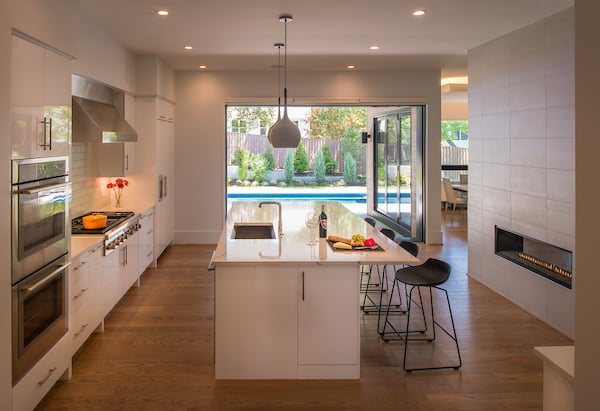 The Solar House, Arlington, Virginia, AV Architects + Builders, Photography by Maxwell Mackenzie
Build a Home That Fits You
Open concept is a personal choice, not a rule. The right design supports your habits, enhances comfort, and adapts to change. Whether you prefer defined rooms or wide-open spaces, understanding your priorities leads to better decisions.
If you’re planning a custom home, schedule a Discovery Call to discuss layout options, or visit our Learning Center for more design insights that help you create a space that truly fits your lifestyle.
Topics: