
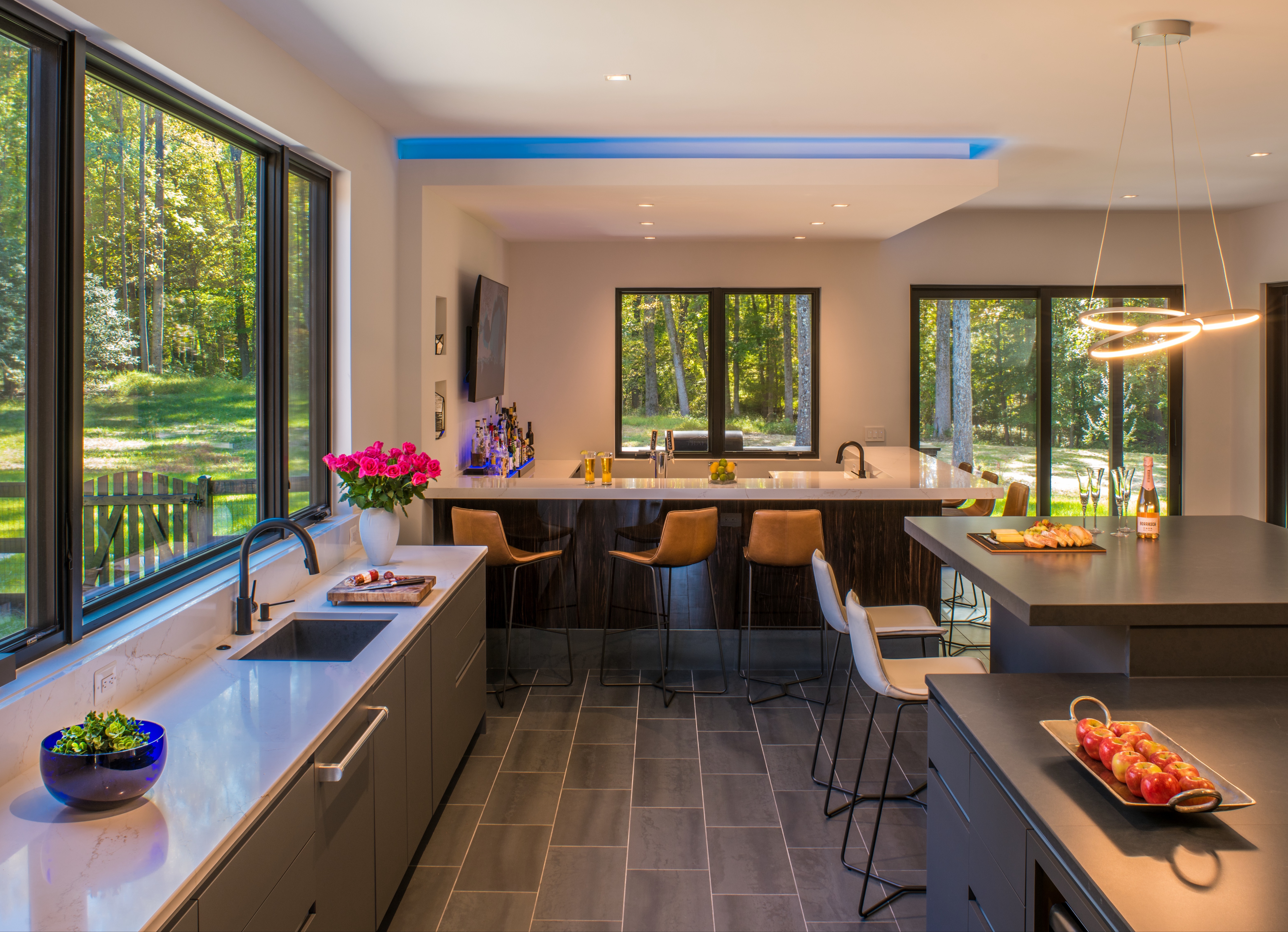
Building a 10,000+ square foot home is a dream for many until you realize that the center of a house that size can feel like a deep cave. Imagine walking through a grand estate where the foyer glows but the kitchen feels like a basement because it sits too far from the exterior walls. It is a common frustration for homeowners who realize that more space often results in more shadows if the design is not handled with precision. Think of a massive home like a thick old-growth forest. The sun hits the top of the canopy and the outer edges, but the forest floor remains dim because the light cannot penetrate the density. You should not have to flip a light switch at noon just to see your kitchen island.
At AV Architects + Builders, we have spent years mastering the art of the modern custom home. We know that "lots of natural light" is the number one design priority for our clients. We have seen how proper light placement changes the way a family lives by turning a morning coffee into a revitalizing experience. Our expertise lies in blending architectural creativity with construction expertise to ensure that light is a permanent resident in your home.
This article will show you exactly how to bring the outdoors in. You will see how the use of advanced glazing, internal courtyards, and vertical light shafts can kill the shadows in your floor plan. We will explain how carving light paths into the very skeleton of a building ensures that every square foot feels intentional. By the end of this, you will understand how to make a 10,000+ square foot masterpiece feel as bright and fresh as a garden pavilion.
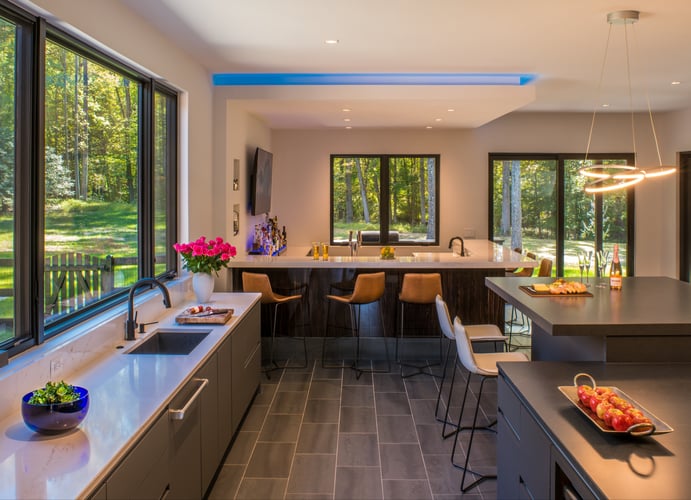
Mastering the Compass for Better Lighting
Before a single brick is laid, a homeowner must understand the compass. Knowing exactly where the sun rises in the east and sets in the west is the foundation of a bright home. In a 10,000+ square foot residence, the solar orientation determines which rooms will be flooded with morning energy and which will enjoy the golden hour glow. If you place your primary living areas on the north side of a massive structure without a plan, they may remain in a cold, blue shadow all year long.
However, having "lots of light" requires a balance of control. This is why bedroom orientation is just as important as living room placement. A smart tip is to position primary suites toward the north or northwest to avoid the aggressive morning glare. To truly solve these layout challenges, architects use specific blueprints for maximizing natural light to ensure the sun reaches the deep core of the floor plan.
Strategic Furniture Placement for Solar Pathing
It is not just about the rooms; it is about how you live in them. The placement of your dining table and TV must be coordinated with mastering directional light. If you love sunset dinners, western light can be beautiful, but it can also be blinding. Positioning the table so the sun is at the diners' backs or using "deep overhangs" on the roof can provide the glow without the squint.
One of the biggest complaints in modern homes with massive glass is screen glare. You should never place a TV directly opposite a south or west-facing window. A smart tip is to position furniture to maximize sunlight while protecting visual comfort. The goal is to have light on your terms, ensuring your furniture layout works with the sun, not against it.
The Science of Light Reflectance Values
Light doesn't just enter a room; it behaves according to the surfaces it hits. This is where Light Reflectance Value (LRV) comes into play. LRV is a scale from 0% (absolute black) to 100% (pure white). For a 10,000 square foot home, choosing interior colors is just as important as the windows themselves. If you have massive glass walls but paint your interiors in colors with an LRV below 50, the light will "die" as soon as it hits the wall.
Thermal Mass Principles for Temperature Control
When you bring in a massive amount of natural light, you are also bringing in solar energy. In high-end design, we use passive solar design to regulate this. Materials like stone, concrete, or thick tiles have the ability to absorb heat during the brightest part of the day and release it slowly when the temperature drops. By placing high-mass materials in the path of direct sunlight, you prevent the room from overheating while keeping the air temperature stable.
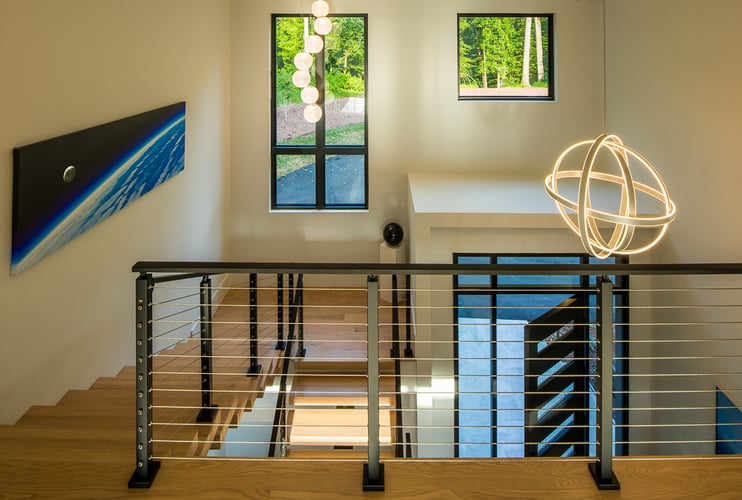 The Astron House, Great Falls, Virginia, AV Architects + Builders, Photography by Maxwell Mackenzie
Proper Selection of Window and Glazing Technology
Choosing a window for a massive home is a technical decision. You must look at the visible light transmittance (VLT), which tells you how much daylight passes through the glass. For a home that feels airy, you want a higher VLT. You also need to consider the frame profile; thin, thermally broken aluminum frames provide the strength needed for massive spans of glass while keeping the visual noise to a minimum.
Advanced glazing strategies are also essential. Using low iron glass for the largest panes ensures the view is ultra-clear without the slight green tint found in standard glass. When transparency is the priority, large format exterior doors are essential to find a system that allows light to wrap around the room, making the corners of the house feel weightless.
Integrating Courtyards and Vertical Light Shafts
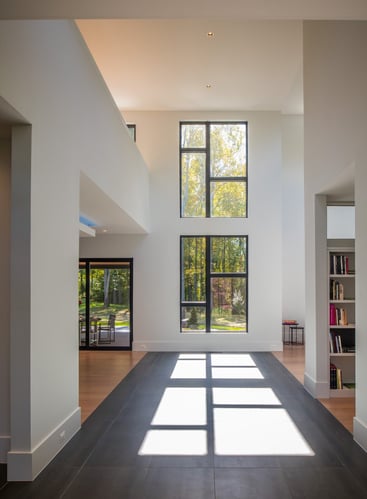
When a home is 10,000 square feet, the middle is far from exterior walls. Incorporating a center courtyard design creates giant light funnels that allow every room to have windows on at least two sides, doubling the light entry. This is one of those hidden construction details that makes a massive footprint feel intimate and bright.
For vertical distribution, a multistory light well is a vertical highway for sunshine. This is an intentional opening that starts at the roof and travels down through the center of the house. By using glass railings and open risers, the light leaks out into the surrounding rooms, ensuring even the lowest level feels bathed in a natural glow.
Utilizing Interior Glass and Circadian LED Proxies
Sometimes a room needs to feel private but still bright. Instead of solid drywall, interior windows or steel-framed glass partitions can be used. This allows light to pass from a sun-drenched living room into a hallway or a home office.
To maintain this feel after dark, modern LED lighting can mimic the sun through circadian lighting. Setting LEDs to change color temperature throughout the day ensures a natural light benefit even after the sun sets. Hiding LED strips in coves along the walls creates a soft glow that mimics the way natural light bounces off surfaces.
Final Blueprint for a Bright Home
Achieving a vibrant, light-filled 10,000+ square foot home requires far more than simply "adding windows." It is a multi-layered architectural strategy that begins with proper orientation to the sun and ends with the scientific selection of interior finishes. By balancing technology with thoughtful design, you ensure that every square foot is touched by the revitalizing power of light.
Ready to bring your vision to life? Schedule a Discovery Call with our team to start designing your sun-drenched custom home, or continue your research by exploring more expert guides in our Learning Center.
Topics: