
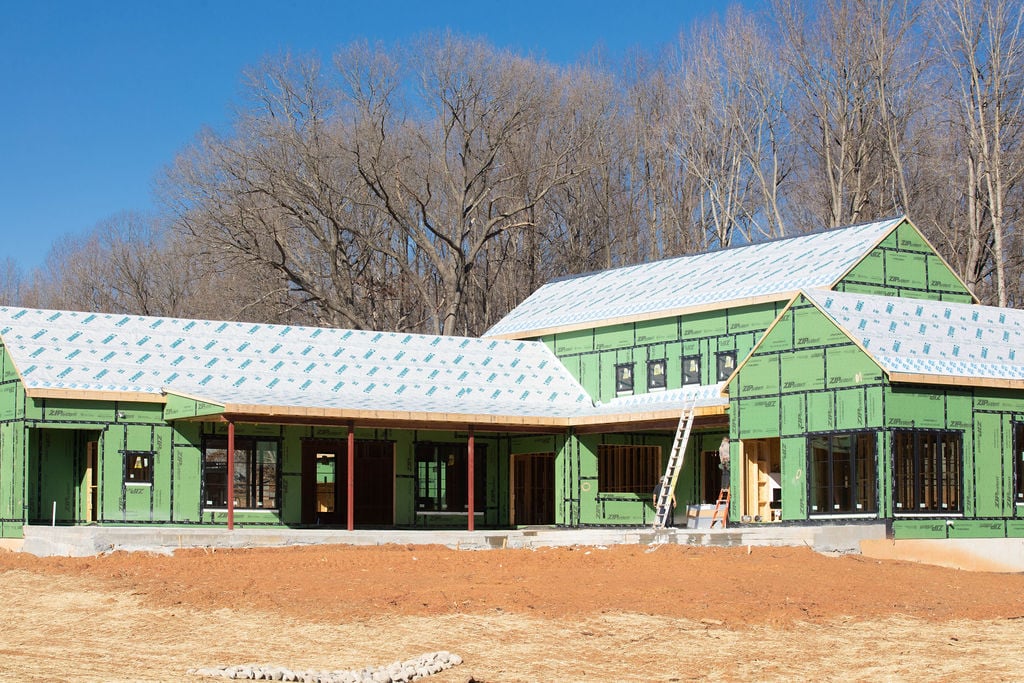
Building on a beautiful piece of land is the ultimate first step toward a legendary legacy. It is your golden chance to transform a quiet lot into the masterpiece custom home you have always imagined. Many people spend their weekends driving past stunning open fields or wooded lots, picturing a house tucked among the trees. When you compare those open spaces to a teardown—an old house on a prime lot—it can be confusing. You are looking at two different paths to the same elite goal, and both offer the power to build exactly what you want in a place you love.
At AV Architects + Builders, we have spent over 20 years helping people make these choices with absolute ease. We know how to uncover the true value in every property so your precious investment is handled with expert care. Our goal is to give you a powerful map to turn any piece of earth into a flawless, luxury home. After you read this, you will feel empowered to seize the best spot for your future. You will master the critical differences between lot costs and site costs, and how to plan for everything from grading to well and septic systems. You will gain the total clarity to move forward with a plan that fits your vision and pours your budget into a home that stands the test of time.
When you buy land, the lot cost is just the sticker price you pay the seller to own the dirt. This is the number you see on the real estate listing. However, the Site Cost is what you spend to make that land battle-ready for a house. This includes everything from essential permits to the pipes buried deep in the ground. On raw land, your site costs can be massive because you are starting from zero. You might find a lot for a low price, but then discover it needs a staggering $100,000 in work just to get it ready for a foundation. Understanding residential lots vs. raw land is vital, as a teardown house lot might have a higher purchase price but dramatically lower prep costs because the heavy lifting—like utility lines and road access—is already finished.
© 2026 AV Architects + Builders. All Rights Reserved
Managing Residential Demolition and Grading for a Clean Slate
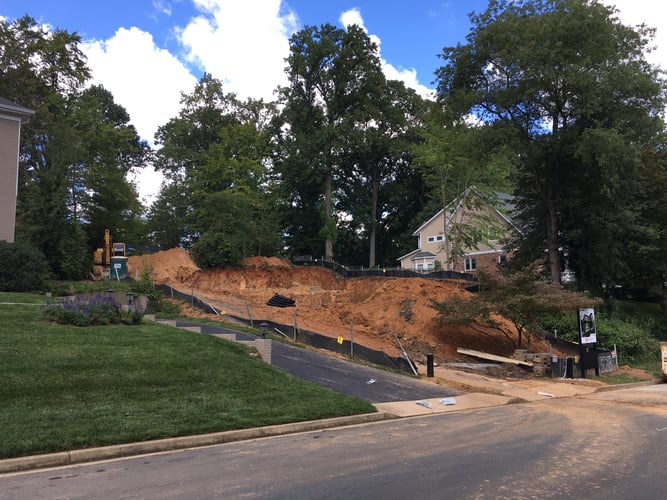
Once you commit to a tear-down, your first major step is removing the old structure. While many fear residential demolition, it is a very straightforward process. A professional crew can usually clear a house in days, providing a very predictable cost that removes the guessing game common with raw land. Immediately following the clearing, we begin grading to shape the earth. This is the art of moving dirt to create a level shelf for your house and ensuring water flows safely away from your future foundation.
On a tear-down site, you gain a massive head start because:
- The primary building shelf is already firmly established.
- Heavy machinery time is slashed, saving on labor costs.
- Soil stability has been proven by the weight of the previous structure.
- Established trees can often be protected, adding instant value.
Planning Stormwater Management and Utilities to Protect Your Property
As we shape the land, we must execute a bulletproof plan for where the rain goes, known as stormwater management. You have to build systems like dry wells or rain gardens to catch water from hard surfaces like your roof and driveway. On raw land, these rules are extremely strict; however, because a tear-down site was already built on, the local government often allows for a much faster permit process.
Equally important is connecting to the grid. When you pick a tear-down, the crucial work is already done—power, gas, and water lines are often already at the build site. On raw land, you are essentially the utility company. The cost to pull lines hundreds of feet from the main road can be a massive surprise. By choosing a site with utilities already in place, you ensure your money goes toward future-proof custom homes rather than hidden pipes.
.png?width=398&height=500&name=image%20(41).png)
Solving the Mystery of Well and Septic Systems
If your dream home is in a rural area, you won't have city water or sewer. You will need a reliable well for water and a high-performance septic system for waste. On raw land, you must perform a perc test to see if the soil can handle waste. If the soil is too rocky or has too much clay, you might be forced to install a very expensive engineered system.
With a tear-down, the site has already proven it can support these systems. While you should still inspect them, you gain several strong advantages:
- Verified Soil: The earth has already demonstrated it can absorb waste through a drain field.
- Existing Well: You may be able to use the current well, saving thousands in drilling costs.
- Placement Clarity: The safest spots for water and waste are already expertly mapped out.
Identifying Zoning and Setback Constraints for Custom Designs
Beyond the physical earth, you must navigate the invisible lines of residential zoning and setbacks. These rules dictate how far your home must be from property lines, wetlands, and roads. On raw land, these boundaries can be daunting to establish, especially if the lot has irregular shapes or protected environmental zones.
In contrast, a tear-down property often provides a vivid blueprint of what is possible. By consulting a zoning laws homeowners guide, you can see exactly where the buildable envelope sits. This clarity allows your architect to design with certainty, maximizing your square footage and views without the risk of costly legal disputes or denied permits later in the process.
© 2026 AV Architects + Builders. All Rights Reserved
Weighing the Financial Benefits of Raw Land vs. Existing Homes
When you choose between raw land and an existing home for a tear-down, you are choosing between a limitless blank slate and a strategic head start. Those who choose to build on vacant land enjoy the thrill of being the first to touch the earth, but that freedom comes with massive unknowns regarding what lies beneath the soil.
Ultimately, buying a tear-down is often the smartest financial move because it is a proven site. Even when you calculate the cost of tearing down and demolishing a house, you are essentially buying an exclusive membership to a neighborhood that is ready for construction immediately. Deciding between raw land and a tear-down is about more than just a view; it is about choosing the smartest foundation for your investment. By looking beyond the surface and understanding the real work required to prep a site, you can ensure your budget builds a better life rather than just a better driveway. Whether you choose the fresh start of the woods or the strategic start of an existing lot, knowing these costs puts you in total control of your journey.
Your land is the start of your dream, and we are here to help you build it right. If you are ready to start with a clear plan, let’s talk. You can schedule a discovery call with our team to talk about your ideas, or visit our Learning Center to learn more about how to build your perfect home.
Topics: